How to start a lending group with neighbours or friends
A ladder, a drill and a trailer are used a few days a year. The rest of the time they sit there. A lending group is an agreement that they can sit with whoever needs them.
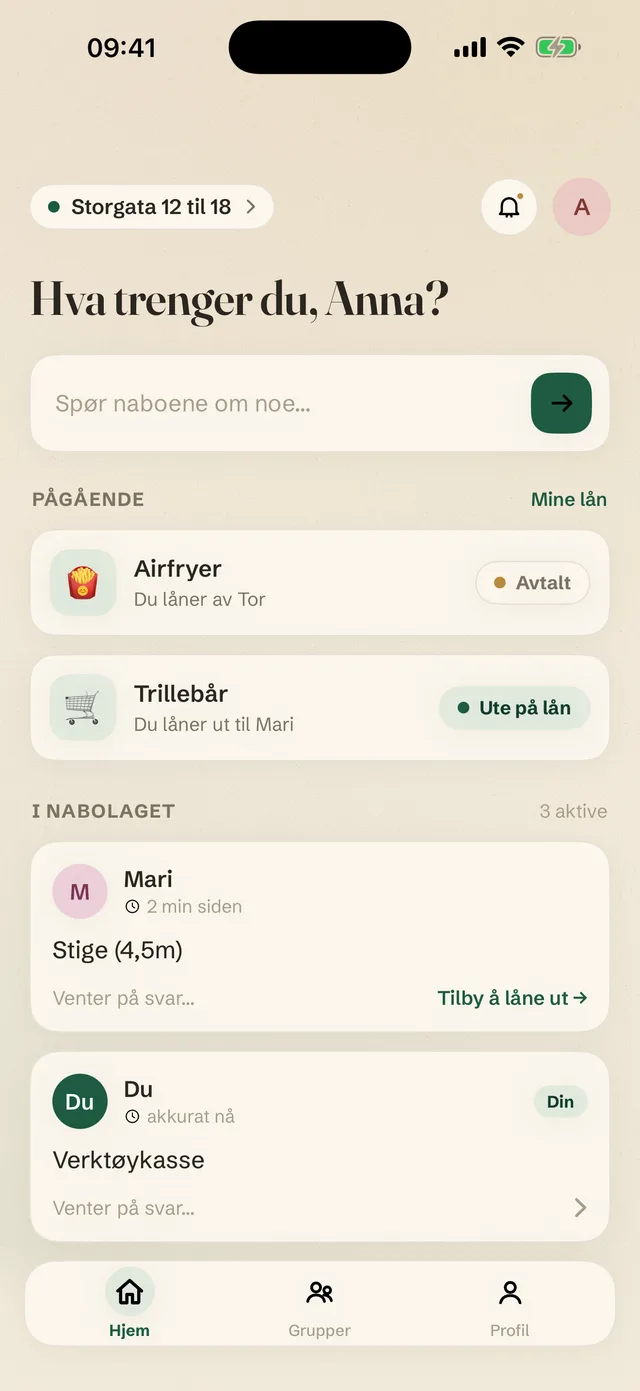
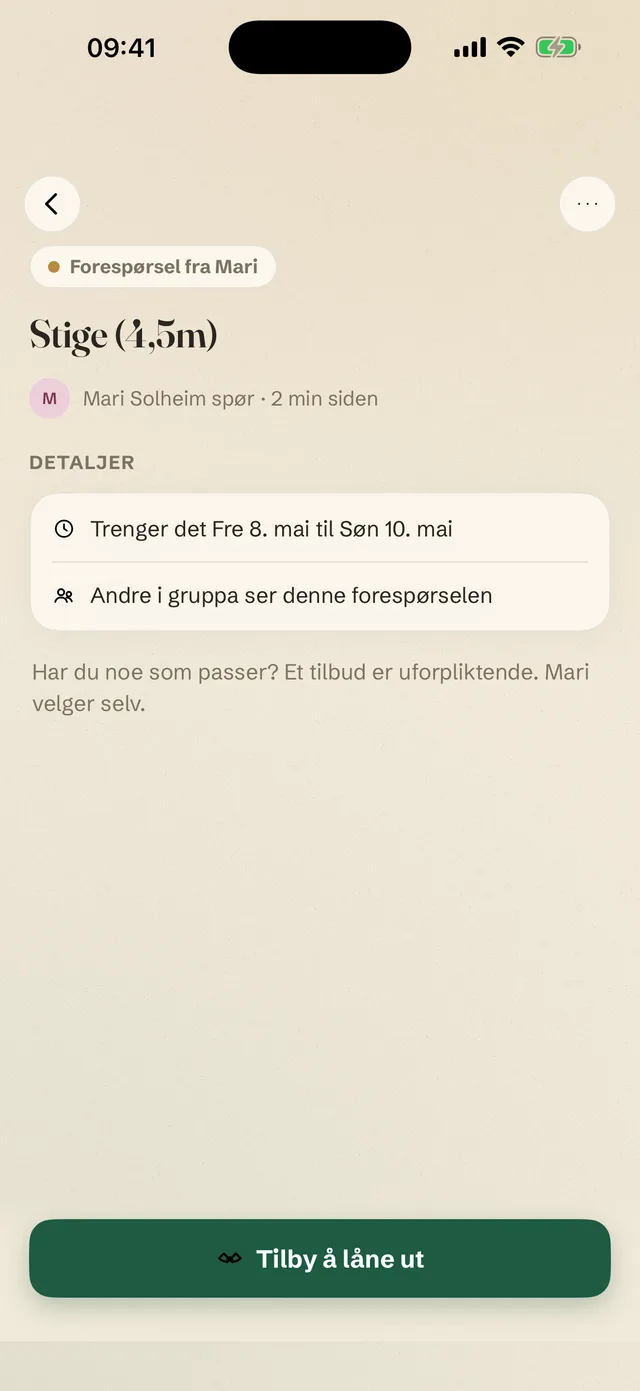
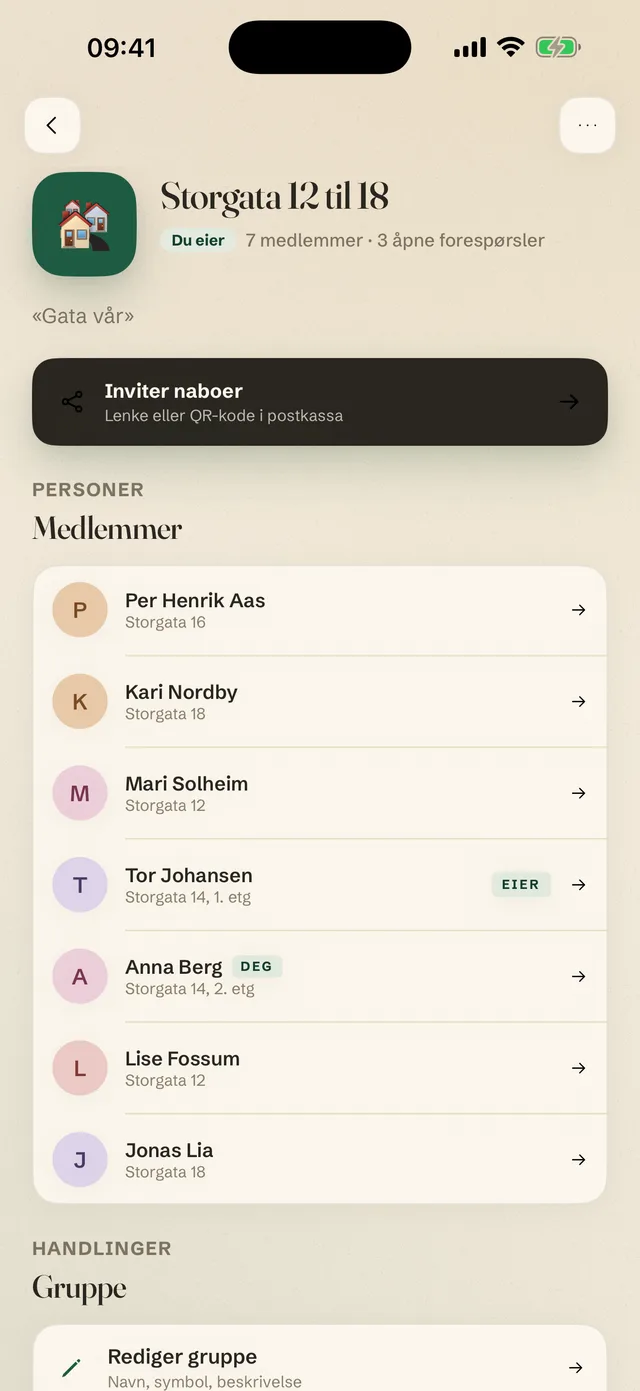
I built Naboskap for groups where people already know each other: the friend group, the street, the cabin neighbours, the parents’ group. The method below works just as well with a list on paper and a group message. Where the app saves you a step, it says so.
1. Choose who to include
Start with people you already trust. The test is simple: Would you lend this person your drill without thinking twice?
Begin small. A handful of households is enough for someone to have what you need. Do not invite the whole housing co-op. Trust comes from people knowing each other, not from living close to each other.
In Naboskap: Groups are closed. As the owner you invite with a link or a short code. The app shares data through iCloud, so members have to be signed in there. The free version lets you be in one group.
2. Agree on what is suitable
What works well is used rarely, can take some wear and is easy to return in the same condition. A ladder, a drill, a pressure washer, a wheelbarrow, a trailer, a tent, a roof box and extra chairs are typical examples.
Some things work poorly:
- things that wear noticeably every time they are used
- things you would be upset to lose
- things that take training to use safely
Each person decides what they want to lend out. Nobody should feel they have to.
3. Make a list of what exists
Without a list, the group ends up with everyone asking “does anyone have a …?”, and the same three people answering. For each item, write down what it is, who owns it and how it is picked up. A photo helps, so nobody wonders which ladder is meant.
In Naboskap: You put up your things with a name, a photo and a short pickup note, for example “by the garage, take when you need”. If you are in several groups, you choose which of them see each item.
4. Set a few simple ground rules
Write them down, and keep them short. Four will do:
- How long. Agree on a return date every time. “Until Sunday” is a date. “A while” is not. If you need the item longer, ask before the date.
- In what condition. Return it clean, dry and with the battery charged.
- If something breaks. Say so the same day. A simple rule is that the borrower arranges the repair or replaces the item, and that ordinary wear is the owner’s concern. Agree on this before something breaks, not after.
- How to ask. Ask in the group, not at the door on a Sunday morning. Say what you need, when and for how long. A no needs no explanation.
In Naboskap: A request can be open, so everyone in the group sees it, or direct to one specific neighbour. You choose whether the item is picked up, delivered or handled by arrangement, and set an agreed date. There is no direct chat, so nobody has to answer right away.
5. Keep track of what is out
The lender should not have to remember where the item is. Note who has what, and until when. A shared note will do. Strike the line when the item is back.
In Naboskap: The home screen shows active loans and requests in the group.
Common mistakes
- Inviting too many. A large group where people do not know each other lends less than a small one where they do.
- Not agreeing on a date. Loans without a date turn into things that are just gone.
- Waiting to mention damage. It gets harder every day.
- Only borrowing, never lending. Put something up yourself before you ask the first time.