How to get a higher score in Stoneward
In games where you drop pieces and merge matching ones, the score is usually decided by how long the board stays tidy. It comes down to where you put the stone, and what you leave alone.
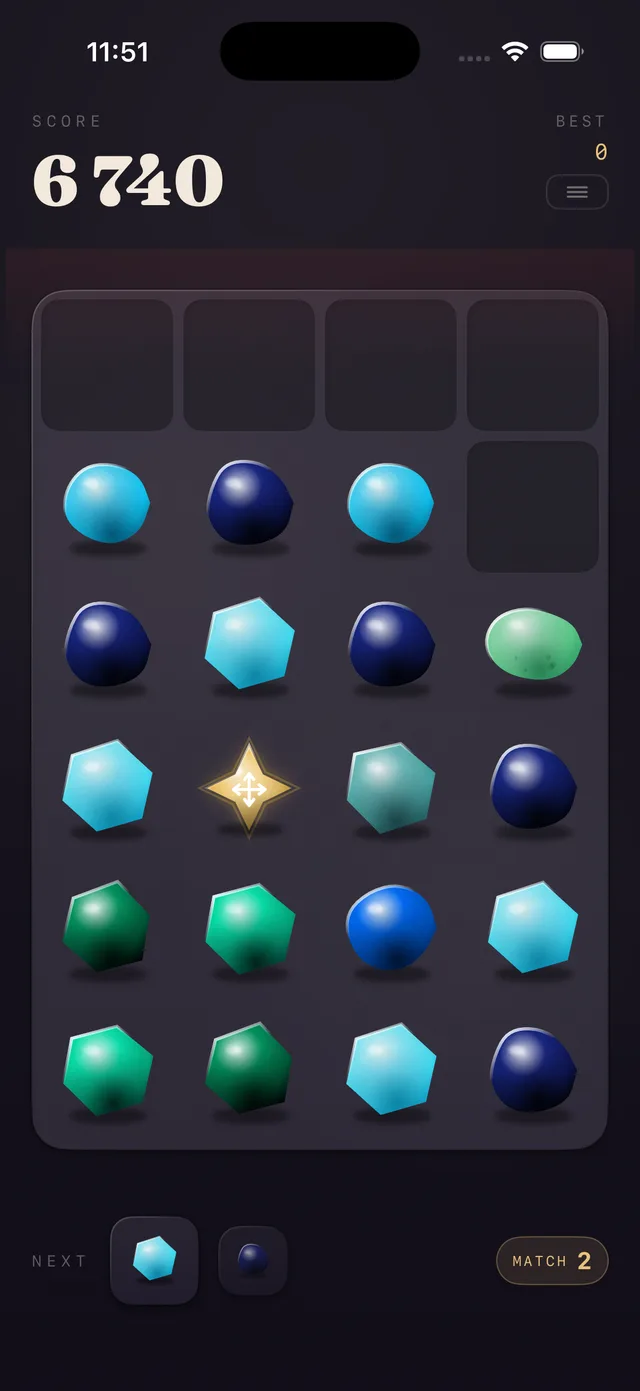
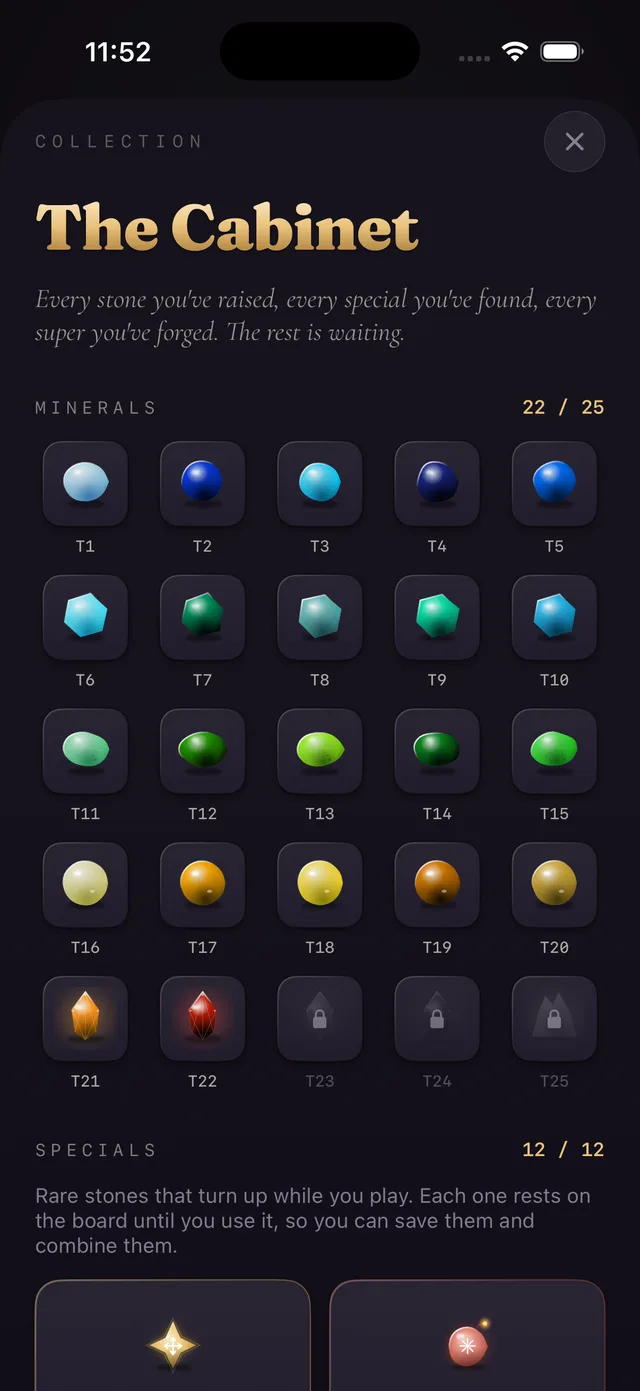
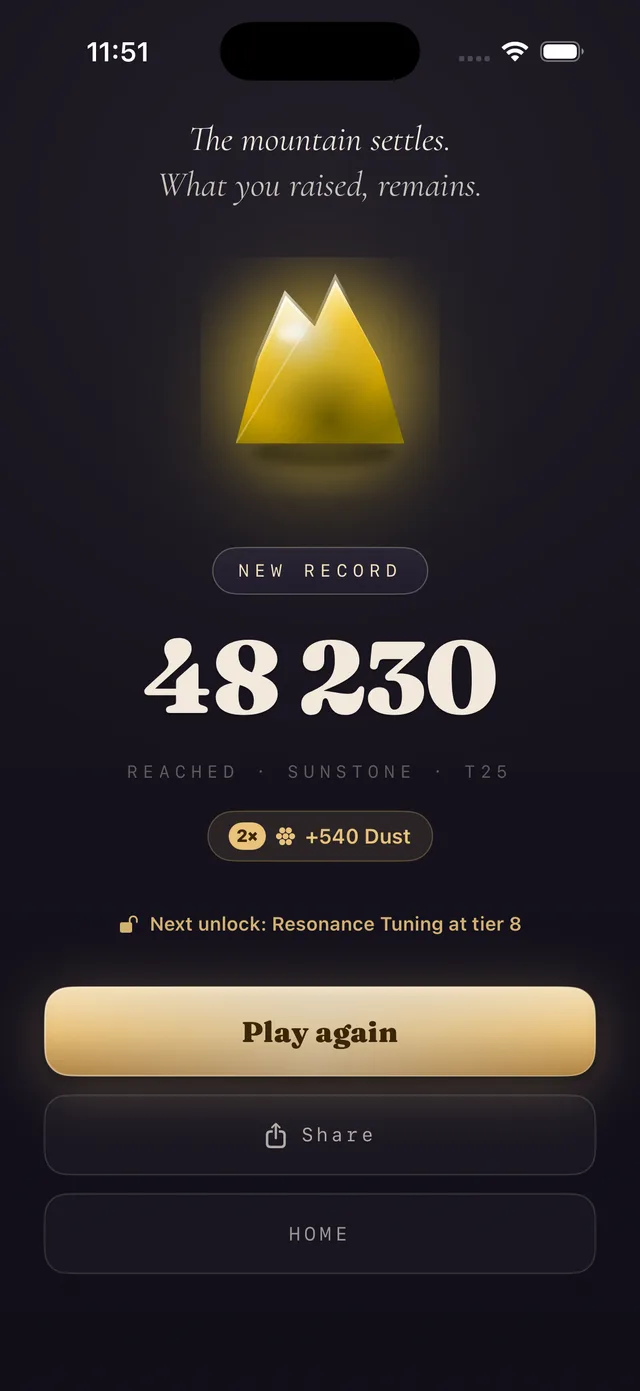
I made Stoneward as a calm game with short rounds and a score to beat. The advice below applies to most games where you drop pieces and merge matching ones. Where Stoneward has something of its own, it says so.
1. Understand what gives points
In this kind of game the points come from the merges, and as a rule big pieces give more than small ones. So the goal is not to empty the board. The goal is to build big pieces without running out of space. Each merge turns two pieces into one, and frees up space.
In Stoneward: Matching stones that come to rest next to each other merge into a bigger one. Each merge yields Dust, and the board builds toward new tiers.
2. Put matching stones next to each other
Before you drop, find where a stone of the same kind is lying. Put the new one beside it. If there is none, put it where it does the least harm: next to a stone one tier away, or at an edge. A stone that lands between two matching ones keeps them apart.
If the game shows which stone comes next, plan for that one too.
3. Build in order
Keep the big stones together on one side and the small ones on the other, sorted by size. A new, bigger stone then ends up beside one that is similar. In many games of this kind one merge triggers the next, and chains like that lift the score.
4. Clear the small stones early
A small stone left lying between big ones is hard to pair. It takes up space for the rest of the round. Merge the small ones while they are easy to reach, even when it gives little there and then.
5. Leave free space
Space is what you have least of. In most games like this the round is over when the board is full. Every stone that does not merge with anything costs space. If the board is tight, choose the safe, small merge over setting up a big one.
6. Save the special stones
Helpers are most useful when the board has locked up. If you use them while there is still plenty of room, you will not have them when they are needed.
In Stoneward: Now and then a special stone appears. You can save it and use it tactically.
7. Use the time between rounds
When the round is over, think through where it locked up. Often it was a stone that was put in the wrong place long before the board filled. Change one thing in the next round.
In Stoneward: The rounds are short. Dust, which you earn by playing, is spent on upgrades. Cores shape how the next run plays. When you are signed in to iCloud, your score can be submitted to three anonymous leaderboards: daily, weekly and all-time.
Common mistakes
- Dropping too fast. Look at where the stone lands, and what it ends up next to.
- Spreading the big stones. Two big stones at opposite ends rarely meet.
- Using the special stones straight away. Save them until the board is tight.
- Chasing one big merge. Many small ones keep the board open longer.