How to keep receipts so you can find them again
A receipt is worth little the day you get it, and a lot the day something breaks. By then it has to be readable, and you have to know where it is.
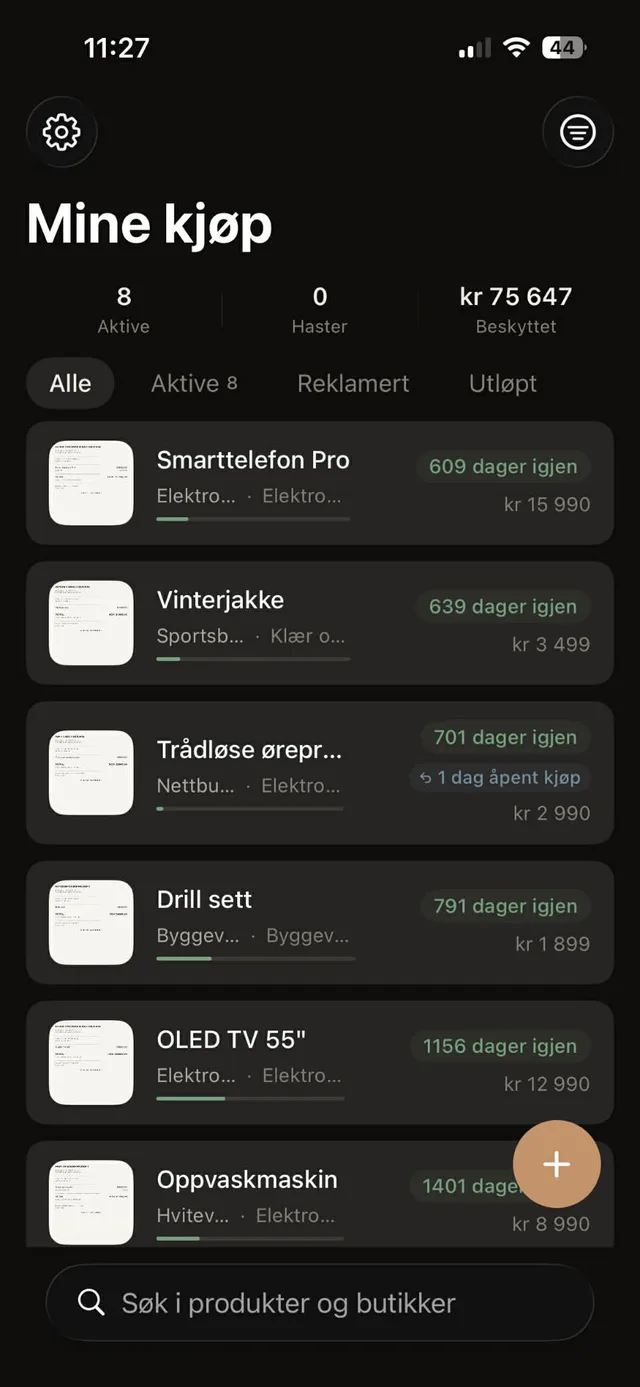
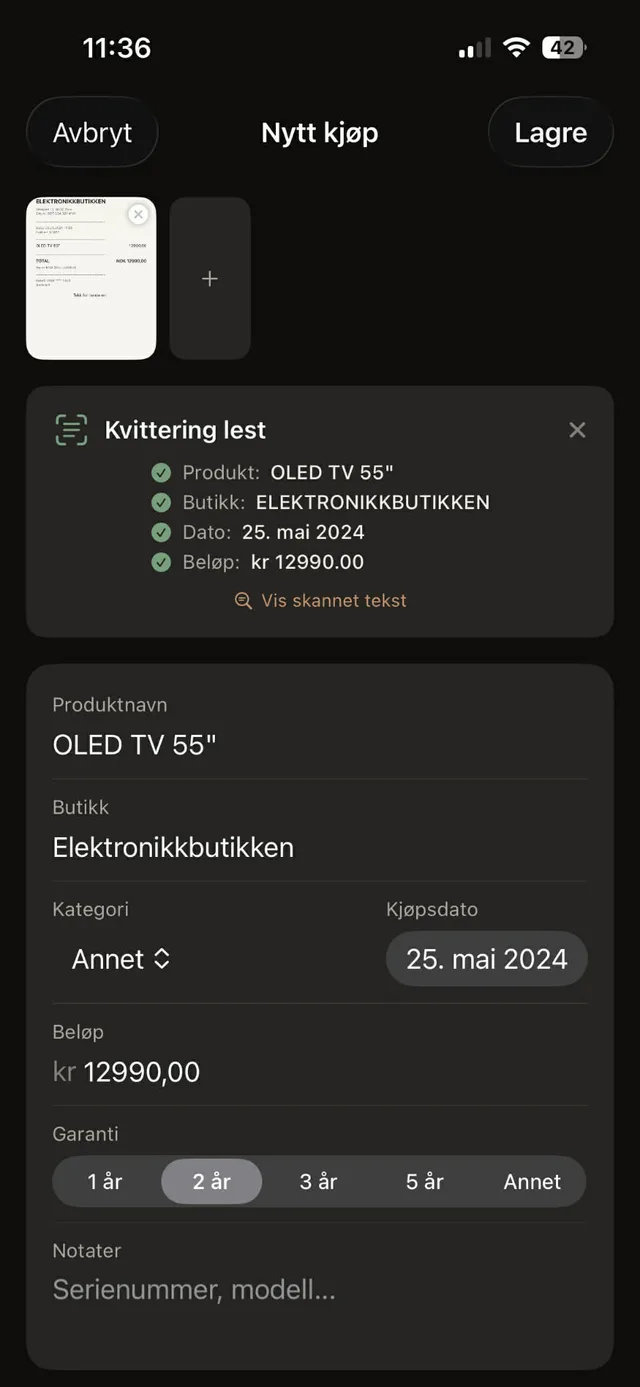
I built Kvitteringsvakt because nobody remembers where the receipt is when the washing machine breaks three years after it was bought. The method below works just as well with an album on your phone or a binder on the shelf. Where the app saves you a step, it says so.
1. Decide what to keep
You do not need the receipt for milk and bread. Keep the receipts for things that are meant to last: white goods, electronics, furniture, tools, bicycles and clothes you expect to wear for a long time. Also keep the ones you may need for an insurance claim, or the day you sell the item on. If in doubt, keep it.
2. Take a photo straight away
Most paper receipts are printed on thermal paper. The print fades with heat, light and time, and can be unreadable long before you need it.
So take the photo the same day, preferably at the till. Lay the receipt flat in good light, and get the whole sheet in, from the store name to the total. If the receipt arrives by email, take a screenshot or save it as a PDF.
In Kvitteringsvakt: Scan the receipt with the camera. The app reads store, amount and date on the phone itself. It also works with screenshots of receipts you received by email.
3. Note what the photo does not tell you
A photo on its own is hard to find again. Note four things:
- store
- date
- amount
- what the item is
The last one matters most. The receipt often shows only an item number or an abbreviation. Write “washing machine”, and you will find it with a search three years from now.
In Kvitteringsvakt: If the text recognition misses an amount or a date, open the receipt and correct the field by hand.
4. Choose one fixed place
One place, not three. An album on your phone, a folder in a cloud service or a binder. What matters is that every receipt ends up there, and that you do not have to remember where.
Make sure there is a copy. If the photos only exist on your phone, they disappear with the phone.
In Kvitteringsvakt: Receipts are stored on the phone and, if you choose, in your private iCloud. You find them again by store, date, category or free text.
5. Note how long you need it
This part applies to Norway only. Norwegian consumer law gives you a five-year right to complain on items meant to last. What counts as such an item, and what applies to your purchase, is explained by Forbrukerrådet, the Norwegian Consumer Council. The rules differ between countries, so elsewhere you check with the consumer authority there. This guide is about finding the receipt again, not about the law.
The simple rule is to keep the receipt for as long as you have the item.
In Kvitteringsvakt: The app remembers the purchase date and lets you know before the deadline runs out. Each category has a typical expected lifetime as a starting point, and you can adjust it per receipt.
6. When something breaks
Find the receipt before you contact the store. Have the purchase date, the amount, what the item is and a short description of the fault ready.
Send the receipt as an image or a PDF, and keep the original yourself. Note when you got in touch, and what the store answered. What you are entitled to depends on the country. For Norway, Forbrukerrådet explains it.
In Kvitteringsvakt: You can export a single receipt as a PDF and send it to the store. In settings there is “Export all”, which gives you one combined PDF of all your receipts.
Common mistakes
- Waiting until you get home. The receipt stays in the bag. Take the photo at the till.
- Photographing half the receipt. Store name, date and total must be in the frame.
- Saving the photo without writing what it is. In three years all receipts look the same.
- Having several places. Some in your email, some in a drawer and some in the camera roll. Choose one.