How to keep a migraine diary you will stick with
A migraine diary is only useful if it gets filled in. So it has to be simple enough to manage in the middle of an attack, and tidy enough for your doctor to read.
I built Lun around one realization: you cannot fill out a form while you have a migraine. The method below works just as well with a notebook on the bedside table. Where the app saves you a step, it says so. This guide is about keeping notes. It gives no medical advice and does not replace a doctor.
1. Decide what to write down
Keep the list short. A starting point is five things:
- when the attack started
- how long it lasted
- how strong it was
- what you noticed
- what you took, and when
What is relevant to note in your case is for your doctor to decide. If you have an appointment coming up, ask what the doctor wants included, and add it. Write the list on the first page, so you do not have to remember it.
2. Log the attack itself first
The only thing that cannot wait is the time. Write down the time when the attack starts, and nothing more. Everything else can be filled in later.
Keep the diary where you are when it happens. A pad on the bedside table, or a note on your phone. The less you have to do, the better the chance that it gets done.
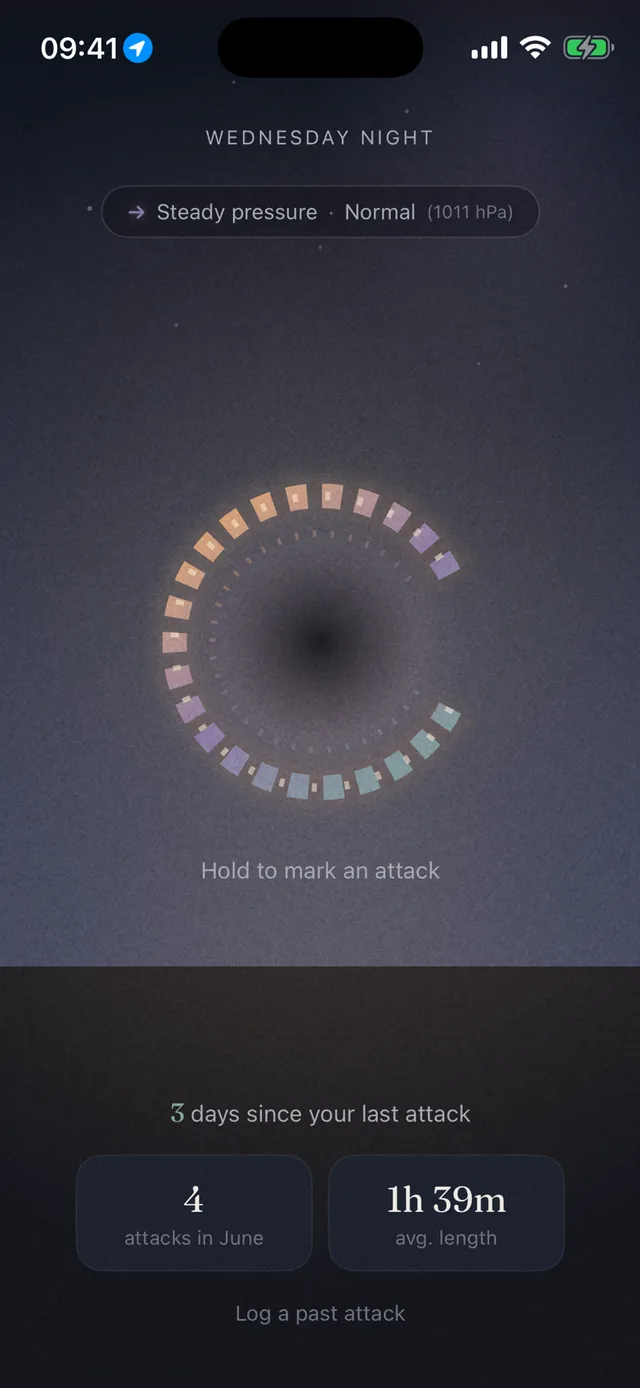
In Lun: Hold down the orb on the home screen, and the attack is logged. That is enough.
3. Fill in the rest afterwards
Once you are back on your feet, go back to the line and fill in the rest: when it ended, how strong it was, what you noticed and what you took. Do it the same day or the day after, while you remember.
Forgot to note an attack? Enter it afterwards, and write that the time is approximate. An approximate line is better than a gap.
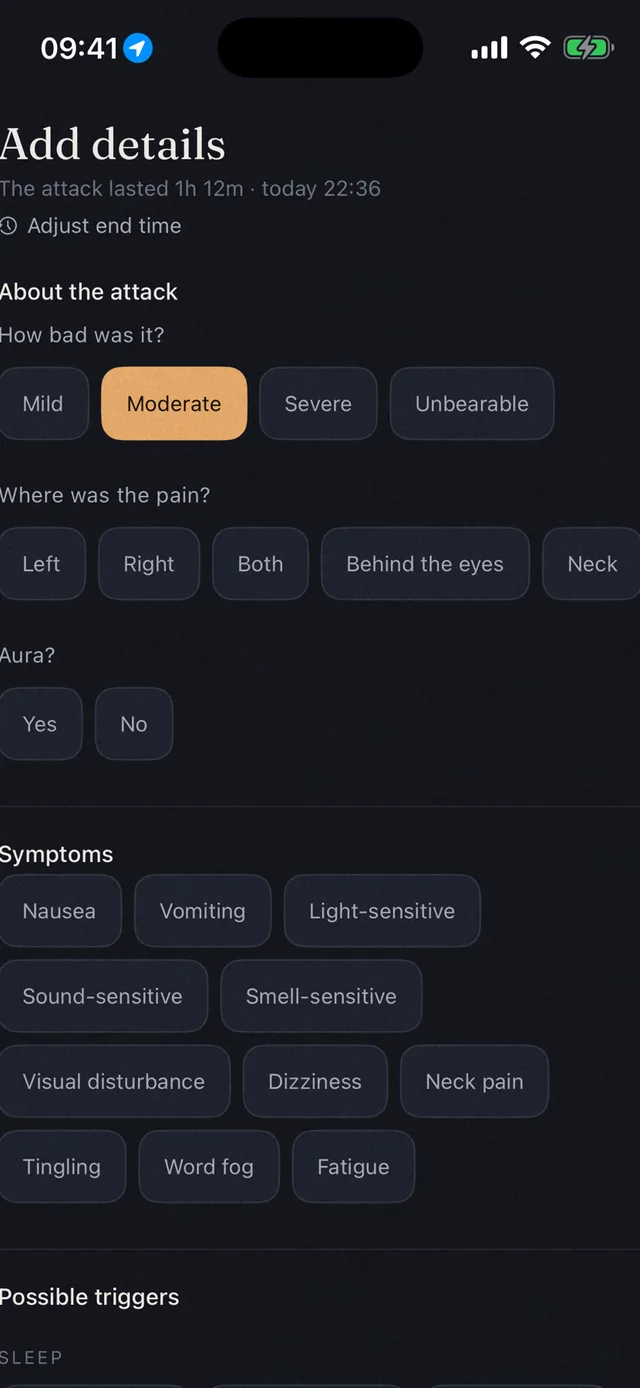
In Lun: Intensity, pain location, symptoms and triggers are added afterwards. You can also log attacks backdated in time.
4. Use the same scale every time
Choose one way of stating strength, and stick to it. Numbers from 1 to 4 and four fixed words do the same job. The point is that an attack in March can be compared with one in June.
The same goes for the words you use for what you noticed. Write them the same way every time.
5. Go through the diary once a month
Count the attacks. Look at how long they lasted, and how strong they were. If you see something that recurs, write it down as a question for your doctor. The diary shows what has happened. What it means is the doctor’s assessment.
In Lun: The app shows how often attacks come, how strong they are, and when in the week and day they most often come. Logging, history and calendar are free.
6. Bring the overview to your doctor
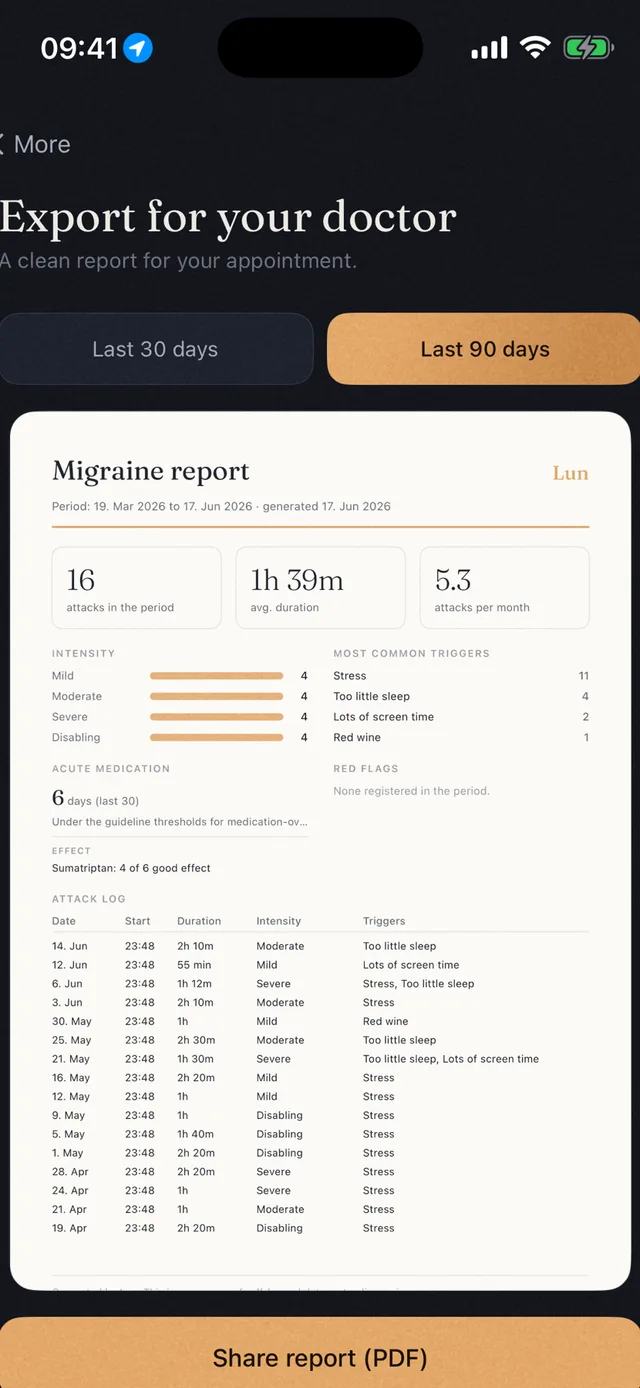
An appointment is short. Make a one-page overview of the period since last time: the number of attacks, how long they lasted, how strong they were and what you took. Bring the whole diary as well, in case the doctor wants to look at single days. Write your questions at the top.
The diary is a basis for the conversation. It makes no diagnosis. If you are worried, or have new, serious symptoms, contact a doctor.
In Lun: The app gathers the log into a tidy report you can bring. The report is created on your device, and is part of the Lun+ subscription.
Common mistakes
- Waiting until the attack is over. By then the time is gone. Note the start right away and the rest afterwards.
- Writing down too much. A form you cannot face filling out stays empty.
- Changing the scale along the way. Then you cannot compare the months.
- Interpreting the diary yourself. Bring it to your doctor, and let the doctor assess what it shows.